

 English
 Suomi
Suomi
 Svenska
 Deutsch
 Dansk
Dansk
 site_lang_carvitasIt
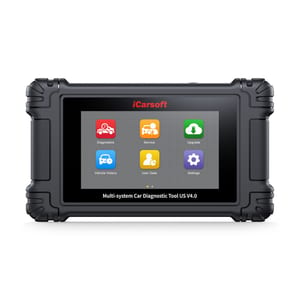
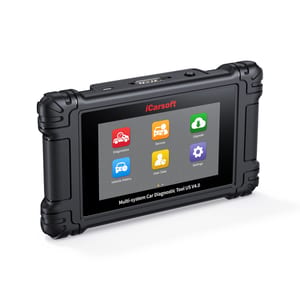
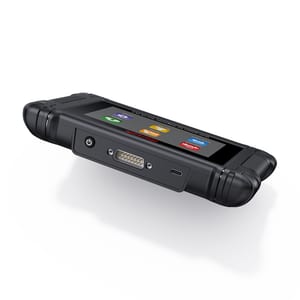
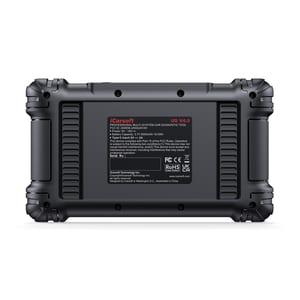
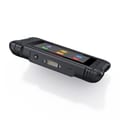
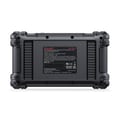
iCarsoft US V4.0 for American car brands
The iCarsoft US V4.0 is a dedicated diagnostic scanner for American vehicle makes, built for deeper access than basic OBD2 readers. It supports full OBD2 and brand specific system diagnostics, reads and clears DTCs across multiple modules, shows live data, and captures freeze frame for faster fault finding. With Auto VIN identification, a touchscreen interface, WiFi updates, and bi-directional active tests, it suits DIYers and workshops that need reliable diagnostics and common service functions on U.S. brands without relying on a laptop.
Czytaj więcej






Masz pytanie dotyczące tego produktu?
Nasz zespół jest gotowy odpowiedzieć na wszystkie pytania.
FAQ Skontaktuj się z nami
American vehicles often store faults across multiple control units, not just the engine ECU. The iCarsoft US V4.0 is built for American car brands and focuses on full system access, practical service work, and guided troubleshooting without needing a separate phone app. It is designed for owners and technicians who want to move beyond a generic OBD2 code reader and actually verify a repair using live data and active tests.
American brand diagnostics beyond the check engine light
A check engine light is only one symptom. On many Ford USA, General Motors, Chevrolet, Chrysler, Dodge, and Jeep vehicles, the real cause can sit in a related module such as transmission, ABS, or airbag. US V4.0 is intended to scan supported systems in the vehicle and present fault codes with supporting context like freeze frame and ECU information. Use cases where this matters: - Intermittent drivability issues: compare live data signals and freeze frame to see what changed at the moment a DTC was stored. - Transmission complaints: read transmission related DTCs and confirm whether a fault is electrical, sensor related, or plausibly mechanical. - Safety system warnings: scan ABS and airbag modules to avoid guessing based on dashboard lights alone. Limitations and trade offs: - Coverage and special functions depend on make, model, year, and installed options. Not every module exists on every vehicle, and not every routine is available on every platform. - A scan tool can identify and validate faults, but it cannot replace mechanical inspection when symptoms point to hardware wear.
Bi-directional tests for faster fault isolation
Reading codes tells you what the vehicle noticed. Bi-directional control helps you test what the vehicle can do. US V4.0 supports actuation and active tests on many available modules, allowing you to command certain components and observe the response. This is especially useful when a fault is intermittent or when you need to confirm wiring, actuator movement, or module command logic. Practical examples: - Door lock, window, or mirror related complaints: run an active test to confirm whether the actuator responds when commanded. - Throttle related issues: after work on the intake or throttle body, use the relevant routine and validate with live data. - EVAP and emissions diagnostics: use OBD2 test modes and monitors to confirm readiness status after repairs. Trade offs: - Active tests are powerful but should be used carefully. Commanding components without understanding the system can create misleading results or trigger additional faults. - Some tests require stable battery voltage. If voltage drops during actuation, results can be unreliable.
Service functions that support real maintenance workflows
US V4.0 includes a set of service functions aimed at common maintenance and relearn tasks. These functions can reduce the need for trial and error after parts replacement and help ensure the vehicle control units accept the new baseline. Typical maintenance scenarios: - Oil and service interval work: reset the oil life and service reminders after maintenance. - Brake work: retract and reset electronic parking brake systems where supported. - Steering and stability work: perform steering angle sensor calibration after alignment or steering component replacement. - Diesel emissions maintenance: run DPF regeneration routines where supported and appropriate. Important limitations: - Service functions vary by vehicle specifics. Always confirm the function is available for your exact model and year. - DPF regeneration should only be performed when the vehicle and environment are suitable. If the underlying cause of soot loading is not fixed, regeneration may not hold. Internal link suggestions for deeper guidance: if you are comparing tool types, see /obd-scanner for general scanners, or /auto-uitlezen for a broader overview of reading and clearing fault codes.
Hardware, updates, and reporting for repeatable diagnostics
US V4.0 is a standalone diagnostic device with a 5 inch touchscreen and WiFi connectivity for updates. It supports Auto VIN identification to reduce manual selection errors and speed up the start of a diagnostic session. It also supports saving diagnostic history and printing reports by connecting to a Windows PC, which is useful when you want to document findings for a workshop file or share results with a technician. Exactly 10 technical product functions:
- Read and clear DTCs across supported vehicle systems
- Full OBD2/EOBD diagnostic modes including I/M readiness
- Display live data streams for supported ECUs
- Capture and view freeze frame data linked to stored DTCs
- Read ECU information for supported modules
- Auto VIN identification for faster vehicle selection
- Bi-directional actuation and active tests on supported modules
- Battery voltage test to verify diagnostic stability
- Save diagnostic history and generate printable reports via Windows PC connection
- Perform supported service resets such as oil reset, EPB, SAS, DPF, TPMS, injector coding, ABS bleeding, and battery management routines
| Specification | Details |
|---|---|
| Operating system | Android |
| Processor | Quad Core 1.3 GHz |
| Memory | 32GB |
| Display | 5-inch LCD capacitive touchscreen (854x480) |
| Connectivity | USB 2.0, Wi-Fi (2.4GHz), OBDII |
| Power input | 9-18V |
| Operating current | ≤500mA |
| Battery capacity | 3.7V 5000mAh (7.4Wh) |
| Tested battery life | Around 6 hours of continuous use |
| Charging | Type C input (5V 2A) |
Zalety i wady
- Dedicated coverage for American vehicle makes with brand specific system access
- Bi-directional active tests help confirm actuator and module behavior
- WiFi updates enable keeping the tool current without a computer
- Auto VIN identification reduces manual selection errors
- Includes common service routines such as oil reset, EPB, SAS, DPF, TPMS, injector coding, ABS bleeding, and battery management where supported
- Function availability varies by make, model, year, and installed options
- Bi-directional tests require careful use and stable battery voltage for reliable results
- Report printing requires connection to a Windows PC via USB
Często kupowane razem z...
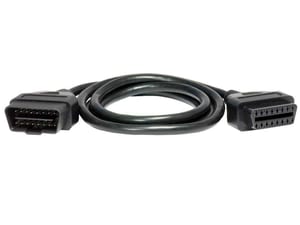
Podsumowanie specyfikacji
- Odpowiedni dla marki samochodu Chevrolet, Chrysler, Dodge, Ford USA, General Motors, Jeep
- Właściwości urządzenia Wbudowany akumulator, Bezpłatne aktualizacje, Ekran dotykowy, Ręczny, Aktualizacje, Połączenie WIFi
- Cechy ABS, Poduszka powietrzna, Stopklatka, Dane na żywo, Reset usługi
- Protokół CAN, EOBD, ISO 9141, J1850 PWM, J1850 VPW, K-Line, KWP-2000, OBD2, CAN-FD
Produkty alternatywne