




 Suomi
Suomi
 Polski
 Svenska
 Deutsch
 Dansk
Dansk
 Italiano
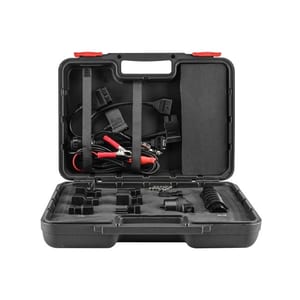
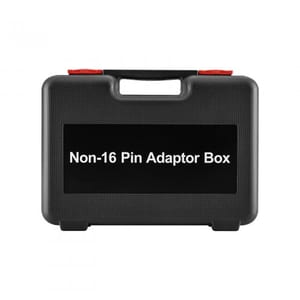
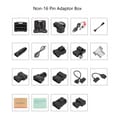
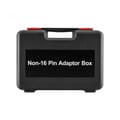
Launch OBD1 adapter kit for pre OBD2 vehicles
The Launch OBD1 Adapter Kit bridges older, non 16 pin diagnostic ports to a standard 16 pin interface so compatible Launch diagnostic tools can communicate with pre OBD2 vehicles. It includes multiple brand specific OBD1 connectors plus external power options, helping workshops and advanced DIY users access engine and system data on vehicles where the diagnostic connector is under the hood or otherwise non standard. Use it when a vehicle has no OBD2 socket.
Read more







Older vehicles often have manufacturer specific diagnostic connectors that do not match the 16 pin OBD2 socket. The Launch OBD1 Adapter Kit is designed to bridge that gap so a compatible Launch diagnostic platform can physically connect to many pre OBD2 passenger cars. Instead of improvising with loose wires, this kit gives you a structured set of non 16 pin adapters plus external power leads, making it practical to bring modern diagnostic workflows to older platforms. Product functions (technical) - Converts non 16 pin OBD1 style diagnostic connectors to a 16 pin diagnostic interface connection - Provides brand specific adapter leads for multiple legacy diagnostic port shapes - Enables external power supply to the adapter box via battery clamp power cable - Enables external power supply via cigarette lighter power cable when supported by the vehicle - Supports quick swapping between different OBD1 connectors without rewiring the diagnostic tool side - Helps establish correct physical pin mapping through dedicated adapter harnesses rather than manual probing - Allows diagnostic sessions on vehicles where the diagnostic connector is located in the engine bay - Reduces connector wear on fragile legacy sockets by using a correctly fitting mating connector - Supports workshop standardization by keeping legacy connectors in one case for repeat jobs - Provides replaceable fuses for the power leads to protect the diagnostic setup during connection errors
Why OBD1 adapters still matter for diagnostics
If you work on vehicles around the OBD1 to OBD2 transition, the biggest barrier is often not software, it is simply getting a stable physical connection. Many pre 1996 vehicles and some later regional models use non standardized connectors, sometimes under the hood, sometimes near the fuse box. This kit is most useful when you already have a Launch diagnostic tool that expects a 16 pin connection but the car does not offer one. Use cases where this kit earns its keep: - Independent workshops that still service older Mercedes, BMW, Toyota, Honda, Ford, Chrysler, Nissan, Kia, Mitsubishi and Hyundai platforms - Import vehicles where the cabin has a 16 pin socket but it is not wired for full diagnostics - Pre purchase checks on older cars where you want to confirm ECU communication before deeper testing Expert nuance: an adapter kit does not create diagnostics where none exist. If the vehicle ECU does not support the data or the diagnostic tool does not support that model, the connection can still fail. The kit solves the physical interface problem, not vehicle coverage.
What is included and how to match the right connector
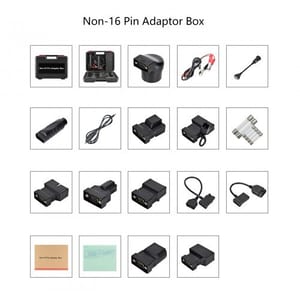
The kit consists of a non 16 pin adapter box and a set of brand specific connectors, plus power leads and fuses. In practice, you identify the vehicle diagnostic connector first, then select the matching adapter lead, then connect your Launch tool on the 16 pin side. Specification overview
| Item | Details |
|---|---|
| Product type | Adapter kit |
| Use | Connects non 16 pin diagnostic ports to a 16 pin interface connection |
| Included connectors (examples) | Mercedes 14 pin, Mercedes 38 pin, BMW 20 pin, Chrysler 6 pin, Ford 6+1 pin, GM/VAZ 12 pin, Honda 3 pin, Kia 20 pin, Mitsubishi/Hyundai 12+16, Nissan 14+16, Toyota 17 pin, Toyota 22 pin |
| Power options | Battery clamp power cable, cigarette lighter power cable |
| Protection | Included fuses for power leads |
| Protocol context | OBD1 physical connectors, bridges to OBD2 style 16 pin interface |
Trade off to consider: because OBD1 connectors are not standardized, the correct lead is chosen by connector shape and vehicle family, not only by model year. When in doubt, visually confirm the port and avoid forcing a connector. Internal link suggestions for building a complete setup: if you also need the main diagnostic device, browse Carvitas categories like /obd-scanner or /obd-uitleesapparatuur. For cable management and hard to reach ports, a matching /obd-verlengkabel can make engine bay work safer and more comfortable.
Power and connection best practices for stable communication
Many OBD1 ports do not provide the same standardized power and ground pins as OBD2. That is why this kit includes external power options. In real workshop conditions, stable power is the difference between a clean session and repeated communication dropouts. Practical guidance: - Prefer battery clamp power when the vehicle battery is accessible and you want the most stable supply - Use the cigarette lighter lead only if the socket is powered and in good condition - Always confirm ignition state requirements for the vehicle before starting a session Limitations and risk management: - Incorrect connector selection can lead to no communication and in worst cases blown fuses on the power lead - Some vehicles require specific diagnostic modes or manufacturer procedures that an adapter alone cannot provide - OBD1 era ECUs can be sensitive to voltage dips, so avoid running long sessions on a weak battery.
Choosing the right setup for your workshop
This kit is a strong fit if you regularly see pre OBD2 vehicles and already use a compatible Launch diagnostic platform. It is also a sensible choice if you want one organized case rather than collecting single adapters over time. When it may not be the best choice: - If you only work on OBD2 vehicles, a standard 16 pin setup is enough - If your diagnostic tool is not compatible with this adapter system, the kit will not help - If you need ECU programming or coding on modern vehicles, this kit is not the deciding factor, your main diagnostic platform is Decision helper: check the vehicle first. If it has a non 16 pin diagnostic connector and you have a Launch tool that expects a 16 pin interface, this kit removes the physical barrier. If the car already has a working 16 pin OBD2 socket, invest instead in a higher quality interface cable or a dedicated OBD scanner.
Advantages & drawbacks
- Bridges multiple non 16 pin legacy diagnostic ports to a 16 pin interface connection
- Does not guarantee vehicle communication because coverage depends on the diagnostic tool and the vehicle ECU
- Primarily useful for pre OBD2 vehicles, offers little value for workshops working only on OBD2 cars
Specs summary
- Features Adapter
- Protocol OBD1