




 Suomi
Suomi
 Polski
 Svenska
 Deutsch
 Dansk
Dansk
 Italiano
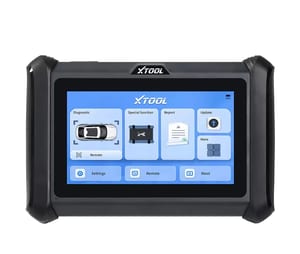
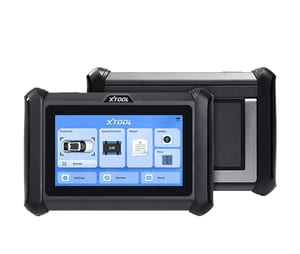
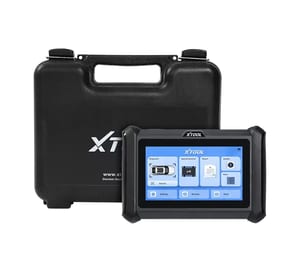
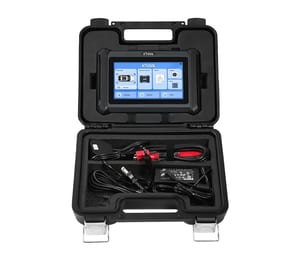
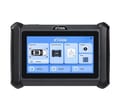
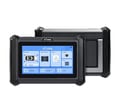
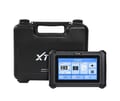
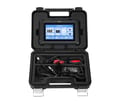
Xtool XT70
The Xtool XT70 is a professional Android based diagnostic scanner built for fast, repeatable fault finding and service work. It combines full-system diagnostics with live data, freeze frame, and active tests, so you can validate a repair instead of guessing. With support for modern communication standards like CAN-FD and DOIP, the XT70 is designed for late model vehicles where basic OBD2 readers fall short. It also includes a broad set of maintenance functions such as ABS bleeding, EPB testing, SAS calibration, BMS reset, injector coding, and DPF regeneration, making it a practical choice for workshops and serious DIY users who want one tool for diagnostics and routine service tasks.
Read more







When a warning light comes on, the real cost is time. The Xtool XT70 is built to shorten diagnosis by giving you full-system access, clear data presentation, and the ability to run active tests and common service functions from a single 7-inch Android 10 tablet. It is designed for technicians and advanced DIY users who need more than generic OBD2 code reading, especially on newer vehicles that communicate via CAN-FD and DOIP.
Product functions
- Read diagnostic trouble codes across available vehicle systems
- Clear diagnostic trouble codes after repairs
- Display live data streams in numeric format
-Graph live data for trend and intermittent fault analysis
- View freeze frame data captured at the moment a fault was set
- Export recorded data streams as CSV files
- Run active tests to command supported actuators from the system menu
- Perform ABS bleeding routines to restore brake system performance after hydraulic work
- Execute DPF regeneration procedures to clear particulate accumulation when conditions allow
- Write injector codes to the ECU for corrected injection control after injector replacement
Full-system diagnostics for faster fault isolation
The XT70 is most valuable when a symptom spans multiple modules. Instead of stopping at a powertrain code, you can scan beyond the engine and confirm whether a fault is isolated or cascading. In practice, this matters for issues like intermittent stalling, where live data and freeze frame can show whether the event was triggered by a sensor signal, a control strategy, or a secondary module request. Trade-off to understand: full-system access does not mean every vehicle exposes every parameter. Data availability depends on the vehicle, the module, and the diagnostic session. Use the XT70 to build evidence: compare freeze frame to current live data, then validate the fix by clearing codes and confirming the fault does not return. Use cases - Pre-purchase inspection: scan for stored and pending faults, then review freeze frame to see operating conditions when the fault occurred - Post-repair verification: clear DTCs and confirm readiness by monitoring live data stability during a test drive Internal
Live data, graphing, and CSV export for real diagnosis
A code points to a circuit or a condition, not the root cause. The XT70 supports live data in text and graph views, which helps you spot patterns like slow sensor response, oscillation, or dropouts. Graphing is especially useful for intermittent faults that do not trigger a code every drive cycle. CSV export is a practical workflow feature when you want to document a complaint, share data with a colleague, or compare before and after values. For example, you can record a data stream during a road test, export it, and review it later to correlate a hesitation with throttle input and sensor feedback.
Limitations and nuance
- Data logging quality depends on the selected PIDs and vehicle bus speed
- Graphing helps reveal trends, but it cannot replace mechanical checks when a fault is caused by vacuum leaks, fuel pressure, or wiring issues.
Bi-directional active tests and service routines
The XT70 supports active tests and a set of common special functions. Active tests let you command certain components to operate so you can confirm whether the actuator responds and whether the system behaves correctly. This is a major step up from passive code reading because it helps separate control issues from mechanical failures. The included maintenance functions are aimed at real workshop tasks, such as ABS bleeding after brake work, EPB testing, SAS calibration, BMS reset, injector coding, DPF regeneration, and TPMS reset. These functions can reduce the need for multiple single-purpose tools. Trade-offs - Special functions are vehicle dependent and may require correct preconditions, such as battery voltage stability, correct temperature ranges, or a stationary vehicle - Some procedures carry risk if used without the right mechanical preparation, for example DPF regeneration should only be initiated when the vehicle and environment are suitable.
Modern vehicle communication: CAN-FD and DOIP readiness
Newer vehicles increasingly rely on faster networks and different transport layers. The XT70 supports CAN-FD and DOIP, which helps maintain compatibility where older scanners may fail to communicate or may only offer limited access. This is especially relevant for late model vehicles where diagnostics can be blocked by outdated interfaces. Below is a technical snapshot of the XT70 platform.
| Specification | |
|---|---|
| Operating system | Android 10 |
| Display | 7 inch, 1024 x 600 |
| Processor | Quad-core 1.5 GHz |
| Memory | 2 GB RAM, 64 GB ROM |
| Battery | 2500 mAh, 7.2 V |
| Vehicle voltage | 9 to 36 V |
| Communication method | Wired |
| WiFi | 2.4 and 5 GHz |
| Bluetooth | BLE 5.0 |
| Compatible protocols | CAN-FD, DOIP |
| Working temperature | 0 to 40 C |
| Storage temperature | -10 to 50 C |
Practical reflection: Choose the XT70 if you want a single tool that can scan beyond generic OBD2, interpret faults using live data and freeze frame, and perform common service routines. If your work is limited to occasional engine codes, a simpler OBD Scanner may be enough. If you regularly do ABS, EPB, injector, or DPF related jobs, the XT70 is the more time efficient choice. FAQ
Advantages & drawbacks
- Supports modern communication standards CAN-FD and DOIP for newer vehicles
- Full-system diagnostics with live data, graphing, and freeze frame in one device
- CSV export enables documentation and deeper analysis of recorded data streams
- Includes active tests and multiple service functions such as ABS bleeding and DPF regeneration
- 3 years of free updates
- Wired communication can be less convenient than a wireless interface in tight cabin spaces
Often purchased together with...
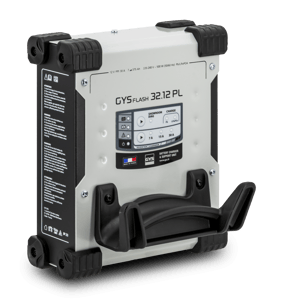
GYSFLASH 32.12 PL
Specs summary
- Suitable for car brand Abarth, Alfa Romeo, Aston Martin, Audi, BMW, Bentley, Chevrolet, Chrysler, Citroën, Dacia, Daihatsu, Dodge, Ferrari, Fiat, Ford EU, Ford USA, General Motors, Honda, Hyundai, Infiniti, Jaguar, Jeep, Kia, Lamborghini, Lancia, Land Rover, Lexus, Maserati, Mazda, Mercedes, Mini, Mitsubishi, Nissan, Opel, Peugeot, Porsche, Renault, Rolls-Royce, Saab, Seat, Skoda, Smart, Subaru, Suzuki, Tesla, Iveco, Toyota, Universal, Volkswagen, Volvo
- Device properties Bluetooth connection, Built in battery, Touchscreen, Handheld, Updates, WIFi connection
- Features ABS, Battery coding, Controlling Actuators, Operate electronic parking brake, Erase fault codes, Freeze frame, Teach in throttle valve, Lambda probe / o2 sensors, Live data, Engine diagnostics, Engine management reset, Oil reset, Brake pad reset, DPF regeneration, Scantool, Service reset, Calibrate steering angle sensor, Transmission
- Protocol CAN, EOBD, ISO 9141, J1850 PWM, J1850 VPW, K-Line, KWP-2000, OBD2, CAN-FD, DOIP