




 Suomi
Suomi
 Polski
 Svenska
 Deutsch
 Dansk
Dansk
 Italiano
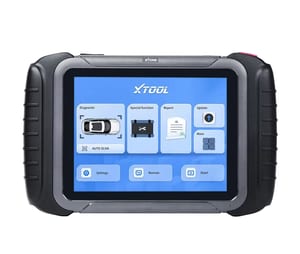
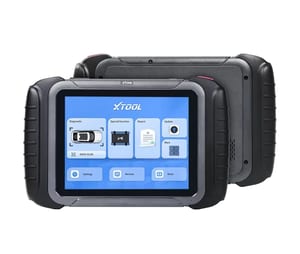
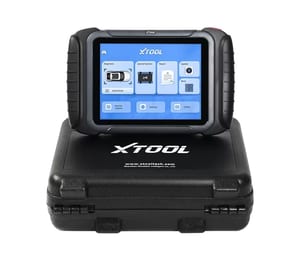
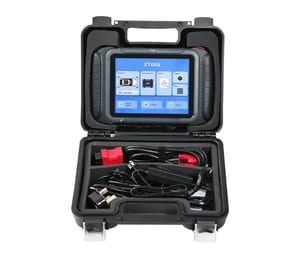
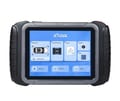
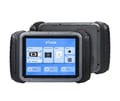
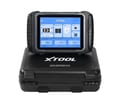
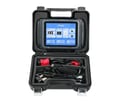
Xtool XT80
The Xtool XT80 is an 8-inch Android diagnostic tablet built for fast, full system vehicle diagnostics and workshop-grade service work. It supports complete OBD2 functions plus bi-directional actuation tests, coding and adaptations, and a wide set of maintenance and reset procedures such as oil reset, EPB, SAS, BMS, injector coding, DPF regeneration, and TPMS reset. With wired communication and support for modern protocols like CAN-FD and DoIP, the XT80 is a practical choice for technicians who need broad coverage and clear live data without stepping up to a larger, more expensive platform.
Read more






When a warning light turns on, the fastest path to a correct repair is not guessing parts, it is verifying the fault, confirming the conditions that trigger it, and proving the fix. The Xtool XT80 is a smart diagnostic tablet designed for that workflow: full system diagnostics, strong data access, and workshop service functions in a compact 8-inch Android device. It is built for mechanics, auto electricians, and maintenance shops that need modern protocol support and practical bidirectional testing without moving to a bulky trolley setup.
Full system diagnostics for real fault finding
The XT80 is designed to go beyond basic engine code reading. It supports full system diagnostics, meaning you can scan multiple control units, view ECU information, read and clear DTCs, and work with live data and freeze frame. In practice, that matters most when the symptom is not isolated to the engine. For example, an ABS warning can be caused by a wheel speed sensor, wiring, a tone ring issue, or a module fault. Full system access lets you compare wheel speed signals live, check stored faults, and confirm whether the module is communicating correctly. A key limitation to understand is that diagnostic depth can vary by vehicle and model year. Even with broad coverage, some modules may expose fewer parameters or tests than others. The right approach is to use the XT80 to establish a direction, then validate with electrical checks where needed. If you are troubleshooting intermittent faults, freeze frame and recorded live data are especially valuable because they show what the ECU saw at the moment the fault set.
Product functions:
- Read diagnostic trouble codes (DTCs) across supported vehicle systems
- Clear DTCs after repairs and verification steps
- Display live data streams from supported ECUs
- Show freeze frame data captured at fault occurrence
- Read ECU version and identification information
- Perform bi-directional actuation tests for supported components
- Execute service reset procedures such as oil and maintenance interval reset
- Run EPB service operations for supported electronic parking brake systems
- Perform SAS calibration for supported steering angle sensors
- Carry out DPF regeneration functions where supported
Bi-directional tests, coding and adaptations: where time is saved
Bi-directional control is where a diagnostic tool starts paying for itself in labor time. Instead of only reading data, you can command certain actuators and observe the response. That is useful for confirming whether a component can be driven by the ECU and whether the circuit is intact. Typical use cases include commanding pumps, valves, or other actuators during troubleshooting. The XT80 also supports coding and adaptations. This is relevant after replacing certain modules or components that require learning or configuration. The trade-off is that coding and adaptation coverage is highly vehicle-dependent and may require stable battery voltage. In a workshop setting, always support the vehicle with a proper power supply during coding or long procedures. If the vehicle uses gateway security restrictions, access may require additional authorization steps depending on the brand and model year. If you are comparing tools, think in workflows rather than feature checklists. If your daily work includes component replacement and verification, bi-directional tests and adaptations reduce comebacks. If you mainly need emissions readiness checks and engine codes, a simpler OBD scanner may be enough.
Service and maintenance functions that match workshop reality
The XT80 supports a wide set of special functions used in service bays. These include common maintenance tasks such as oil reset, EPB service, SAS, BMS reset, injector coding, DPF regeneration, and TPMS reset. These functions are most valuable when you want to complete a job end-to-end without switching tools. A practical example: after a battery replacement on many modern vehicles, a BMS reset or battery registration step helps the charging strategy adapt to the new battery. Skipping that can lead to undercharging, overcharging, or premature battery wear. Another example is EPB service mode, which is often required before rear brake pad replacement. DPF regeneration functions can be helpful when diagnosing soot load issues, but they should be used with caution: forced regeneration is not a substitute for fixing the root cause, such as a faulty differential pressure sensor, EGR issue, or driving profile that never reaches operating temperature. TPMS reset support is useful for vehicles that require a reset after tire rotation or sensor replacement. However, TPMS workflows differ widely. Some cars need a simple reset, others require sensor programming or relearn procedures. If your shop does frequent TPMS sensor programming, you may want a dedicated TPMS tool as well.
Hardware, connectivity and protocol support: what it means in practice
The XT80 is an 8-inch capacitive touchscreen tablet running Android 10 with wired vehicle communication. Wired communication is a benefit when you want consistent connection stability during long tests, coding, or service routines. It also supports WiFi for updates and includes modern protocol support such as CAN-FD and DoIP, which is increasingly important on newer vehicles. Below is a specification overview based on available product information.
| Specification | |
|---|---|
| Operating system | Android 10 |
| Display | 8-inch capacitive touchscreen, 1024 x 768 |
| Processor | 4-core 1.50 GHz |
| Memory | 4 GB RAM, 64 GB ROM |
| Communication method | Wired |
| WiFi | 2.4 GHz and 5 GHz |
| Input voltage | 9 to 36 V |
| Supported protocols | CAN-FD, DOIP |
Limitations and trade-offs to consider:
- Coverage is broad, but not every function is available on every vehicle. Always confirm support for your exact model and year if a specific procedure is critical.
- Advanced procedures like coding, adaptations, and DPF routines require stable vehicle voltage and correct preconditions.
A tool can start a procedure, but the technician must ensure the vehicle is in the right state.
- Wired operation is stable, but it may be less convenient if you prefer moving around the vehicle without a cable.
Advantages & drawbacks
- Supports modern protocols CAN-FD and DOIP for newer vehicle communication
- Full system diagnostics with live data and freeze frame for accurate fault confirmation
- Bi-directional actuation tests help verify components and circuits before replacing parts
- Includes key workshop service functions such as EPB, SAS, BMS, injector coding, DPF and TPMS reset
- 3 years of free updates
- Wired connection can be less convenient than a wireless dongle for moving around the vehicle
Often purchased together with...
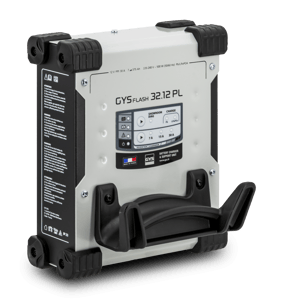
GYSFLASH 32.12 PL
Specs summary
- Suitable for car brand Abarth, Alfa Romeo, Aston Martin, Audi, BMW, Bentley, Chevrolet, Chrysler, Citroën, Dacia, Daihatsu, Dodge, Ferrari, Fiat, Ford EU, Ford USA, General Motors, Honda, Hyundai, Infiniti, Jaguar, Jeep, Kia, Lamborghini, Lancia, Land Rover, Lexus, Maserati, Mazda, Mercedes, Mini, Mitsubishi, Nissan, Opel, Peugeot, Porsche, Renault, Rolls-Royce, Saab, Seat, Skoda, Smart, Subaru, Suzuki, Tesla, Iveco, Toyota, Universal, Volkswagen, Volvo
- Device properties Bluetooth connection, Built in battery, Touchscreen, Handheld, Updates, WIFi connection
- Features ABS, Battery coding, Controlling Actuators, Airbag, Coding, Component testing, Operate electronic parking brake, Erase fault codes, Freeze frame, Teach in throttle valve, Injector coding, Lambda probe / o2 sensors, Live data, Engine diagnostics, Engine management reset, Oil reset, Brake pad reset, DPF regeneration, Scantool, Service reset, Immobilizer, Calibrate steering angle sensor, Transmission
- Protocol CAN, EOBD, ISO 9141, J1850 PWM, J1850 VPW, K-Line, KWP-2000, OBD2, CAN-FD, DOIP