

 Suomi
Suomi
 Polski
 Svenska
 Deutsch
 Dansk
Dansk
 Italiano
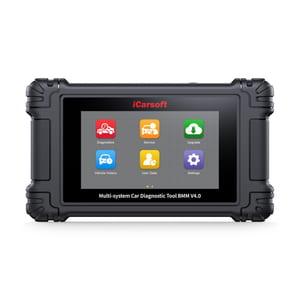
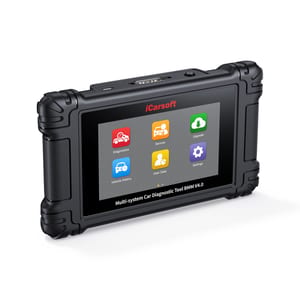
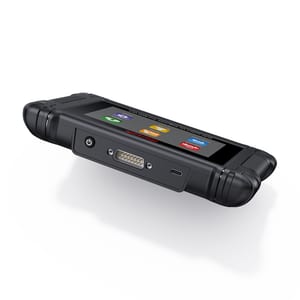
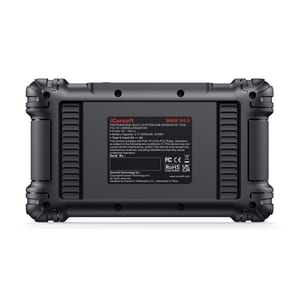
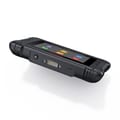
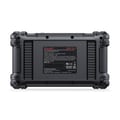
iCarsoft BMM V4.0 for BMW and Mini
The iCarsoft BMM V4.0 is the BMW, Mini and Rolls-Royce specialist in the V4.0 range. It goes deeper on these brands than the multi-make DE V4.0: full-system diagnostics with the BMW-group module tructure, bidirectional active tests, service routines that follow BMW logic (oil-condition based service rather than fixed intervals), battery registration that the alternator actually respects, and (the differentiator) ECU coding and adaptation on supported modules for retrofit activation, feature changes and post-replacement re-coding. Built for BMW, Mini and Rolls-Royce specialists at a handheld price. It supplied with BMW/Mini software pre-installed, and 2 further vehicle makes can be downloaded free of charge.
- BMW-group coding and adaptation on supported modules: retrofit activation, hidden features, coded replacement modules. Adaptation, not flashing.
- Battery registration that the IBS and alternator system actually accept after a battery change.
- Service routines following BMW logic: condition-based service reset, EPB, SAS, DPF regen, air suspension.
Right pick for BMW, Mini and Rolls-Royce specialists: independent workshops, enthusiasts running multiple E, F or G chassis.
Read more







Coding is what makes BMW different. Retrofit foglight activation, video-in-motion, sport-display logic, dimmable DRLs, coded replacement modules that need to talk to the rest of the CAN bus: most of this is locked off behind dealer software. The BMM V4.0 unlocks it without ISTA, without a laptop, and without a subscription, across the BMW Group brands: BMW, Mini and Rolls-Royce. It also handles BMW's specific service logic (condition-based service, not fixed intervals) and battery registration that the IBS sensor and alternator strategy actually respect. Diagnostics, bidirectional tests, service routines and coding/adaptation in one handheld at a fraction of dealer-tool cost. Important nuance: coding here means adaptation and configuration changes (re-coding modules, activating features, injector and SAS coding). It is not firmware flashing. Buy ISTA if you need to flash a new map.
Which vehicles the iCarsoft BMM V4.0 covers
The iCarsoft BMM V4.0 is focused on BMW, Mini and Rolls-Royce brands. Coverage and the depth of specific service routines vary by model year and ECU configuration. Verify your exact vehicle in the coverage list before relying on a specific job.
- BMW
- Mini
- Rolls-Royce
All-system diagnostics that go beyond OBD2
BMW all-system means everything: DME / DDE (engine), EGS (transmission), DSC / DXC (chassis), AIRBAG / ACSM (restraints), FEM / BDC / KAFAS (body and front cameras), HU_NBT / HU_NBT_EVO / HU_MGU (head unit, for fault retrieval), instrument cluster (KOMBI / KOMBI_LCI), TPMS (RDC), and on hybrids and EVs the HV battery (EME) and DC-DC converter. The BMM V4.0 connects to each of these where supported across E-chassis (E46 to E93), F-chassis (F10, F30, F32, etc.) and G-chassis (G20, G30, G80 onwards), reads codes, captures freeze frame and live data, and reads ECU software levels for cross-referencing against forum and specialist data.
The depth differentiator vs. the multi-make DE V4.0 is in the BMW-specific modules, particularly the body modules (FEM / BDC) where coding lives, and in the granularity of live data on the DME / DDE. If you do mostly BMW work, the BMM V4.0 is the right tool and the depth-vs-breadth choice is obvious.
Bidirectional active tests for verified repairs
Bidirectional control on BMW and Mini includes the routine stuff (cooling fans, EGR on diesels, electric water pump, throttle adaptation) and the BMW-specific stuff that matters in a workshop: SBC pre-charge on early E-class (where shared), VANOS solenoid testing, valvetronic motor calibration, M-DCT clutch adaptation, and the DSC pump-motor cycle for an ABS bleed. Many of these tests are the difference between replacing the right component and replacing the engine.
What the BMM V4.0 looks like in practice
Four signature workflows where the tool earns its place:
- Battery registration on an F30 320d after replacement. Replace the battery on an F30 without registering it and the alternator never fully charges the new battery. Premature failure in 12 to 18 months and ESP, cruise and idle-stop warnings. The BMM V4.0 registers the new battery to the IBS sensor and DME, with the correct Ah and chemistry (AGM, EFB or standard). Two-minute job that saves a battery.
- VANOS solenoid bidirectional test on an N52 or N53 engine. Rough idle and a P0010-series code on an N52 is often the VANOS solenoid screen rather than the solenoid itself. Use the BMM V4.0 to bidirectionally cycle the solenoid and watch the camshaft position response on live data. If the solenoid responds, the screen is the problem. If it does not, the solenoid is. Either way you know before you buy parts.
- Mini Cooper S R56 EPB service for rear pad replacement. The R56 Cooper S has a manual handbrake, but the JCW and later F56 Cooper S have an EPB. On F56, the BMM V4.0 retracts the EPB caliper pistons, lets you change the rear pads safely, then reinitialises the system. Never try to push an EPB piston manually. You destroy the motor.
Service and reset functions on this tool
Routine availability depends on the vehicle. Below are the routines the BMM V4.0 performs on supported models. Always follow the on-screen prerequisites (ignition state, battery voltage, fuel level for diesel regen).
- Oil and service interval reset. Resets the oil-life counter and service-due indicator after an oil and filter change. When: After every engine oil change or extended service.
- Throttle body adaptation and relearn. Resets and re-teaches the closed-throttle position to the ECU. When: After cleaning or replacing the throttle body, or after a battery disconnection on some makes.
- Electronic parking brake (EPB) service. Retracts the EPB caliper pistons so brake pads can be replaced, then reinitialises the system. When: Before replacing rear brake pads or discs on any vehicle with an electronic parking brake.
- Steering angle sensor (SAS) calibration. Teaches the steering angle sensor where straight-ahead is, so ESP and stability control behave correctly. When: After wheel alignment, steering rack replacement, steering column work, or any ABS / SRS warning related to SAS.
- DPF (diesel particulate filter) regeneration. Forces a manual regeneration cycle to burn off accumulated soot when passive regen has failed. When: After repeated short trips, after a sensor or EGR repair, or when the DPF warning appears.
- Injector coding. Writes the calibration code of each new diesel injector into the ECU so fuel delivery is balanced. When: After replacing one or more diesel injectors.
- ABS bleeding. Actuates the ABS and ESP modulator solenoids so trapped air can be bled out of the hydraulic block. When: After replacing the ABS modulator, master cylinder, or bleeding the brakes with air-in-the-block symptoms.
- TPMS (tyre pressure monitor) reset and relearn. Re-registers wheel-mounted TPMS sensor IDs after tyre rotation, new wheels or sensor replacement. When: After fitting new sensors, changing wheels, or rotating tyres on systems that do not auto-relearn.
- Battery management and registration. Tells the body control module that a new battery has been fitted and (for AGM / EFB) what type it is. When: Any time the battery is replaced on a vehicle with intelligent charging and start-stop.
- Air suspension service. Reads, calibrates and resets air suspension control modules including compressor and valve actuation tests. When: After replacing a compressor, valve block, height sensor or after suspension-related fault codes.
- A/C system reset and learn. Resets and re-learns climate control flap motors, compressor adaptation and refrigerant pressure logic. When: After A/C component replacement, refrigerant service, or climate-control module replacement.
- Headlight initialisation and range adjustment. Calibrates headlight aim sensors and adaptive headlight modules after replacement or alignment. When: After headlight replacement, suspension changes that affect ride height, or related fault codes.
- Transmission adaptation and learn. Resets shift adaptation values and triggers a relearn of clutch wear and shift timing on supported automatic and dual-clutch gearboxes. When: After a transmission fluid and filter service, clutch replacement on DCT, or major adaptation drift causing harsh shifts.
- AdBlue and SCR system reset. Resets AdBlue tank-level sensor, NOx sensor adaptation and SCR-related counters on supported diesels. When: After AdBlue tank refill on vehicles that need a reset, NOx sensor replacement, or SCR fault clearing.
- NOx sensor reset and learn. Performs the relearn routine after replacing one or both NOx sensors on diesels with SCR. When: After NOx sensor replacement or after persistent emissions-related fault codes that point to the NOx sensor.
- High-voltage battery system diagnostics. Reads HV battery management module fault codes, cell-group voltages and pack-temperature data on supported hybrids and EVs. When: After an HV warning, hybrid system fault, or before purchase of a used hybrid or EV.
- Radar and camera (ADAS) calibration. Initiates calibration routines for ADAS sensors after windscreen replacement, sensor swap or related fault codes. When: After windscreen replacement on ADAS-equipped vehicles, after radar or camera replacement, or after dashboard ADAS warnings.
Specifications
Supported diagnostic protocols on this variant: OBD-II, CAN, CAN-FD, K-Line, KWP-2000, BMW gateway protocol.
| Operating system | Android |
|---|---|
| Processor | Quad-Core 1.3 GHz |
| Memory | 32 GB |
| Display | 5-inch LCD capacitive touchscreen (854 x 480) |
| Connectivity | Wi-Fi 2.4 GHz, USB 2.0, OBD-II |
| Power input | 9 to 18 V vehicle power |
| Battery | 3.7 V, 5000 mAh (7.4 Wh) |
| Tested battery life | ~6 hours continuous use |
| Charging | USB-C input (5 V, 2 A) |
| Operating temperature | 0 to 50 °C |
| Storage temperature | -20 to 70 °C |
| Dimensions | 200 x 116 x 30.2 mm |
| Net weight | ~380 g |
The BMM V4.0 will be delivered with BMW/Mini software pre-installed, and 2 further vehicle makes can be downloaded free of charge.
Advantages & drawbacks
- BMW-specific service logic: condition-based service reset, IBS battery registration.
- Bidirectional tests including VANOS, valvetronic, DSC pump-motor, EPB and more.
- Covers E-chassis, F-chassis and G-chassis BMW plus R-chassis and F-chassis Mini.
- DPF forced regen on supported BMW diesels.
- Free lifetime Wi-Fi updates.
- The BMM V4.0 will be delivered with BMW/Mini software pre-installed, and 2 further vehicle makes can be downloaded free of charge.
- No key programming. That is specialist tool territory.
- Always use a battery support unit when coding, otherwise you risk bricking a module.
- HV battery cell-level work on iX, i4 or i7 is dealer-tool territory.
- Some very new G-chassis modules may need a tool firmware update before they are fully supported. Keep the device updated.
Often purchased together with...
Specs summary
- Suitable for car brand BMW, Mini
- Device properties Built in battery, Free updates, Touchscreen, Handheld, Updates, WIFi connection
- Features ABS, Battery coding, Controlling Actuators, Airbag, Operate electronic parking brake, Erase fault codes, Freeze frame, Teach in throttle valve, Injector coding, Lambda probe / o2 sensors, Live data, Engine diagnostics, Engine management reset, Oil reset, Brake pad reset, DPF regeneration, Scantool, Service reset, Immobilizer, Calibrate steering angle sensor, Transmission
- Protocol CAN, EOBD, ISO 9141, J1850 PWM, J1850 VPW, K-Line, KWP-2000, OBD2, CAN-FD, DOIP
Alternative products