

 Suomi
Suomi
 Polski
 Svenska
 Deutsch
 Dansk
Dansk
 Italiano
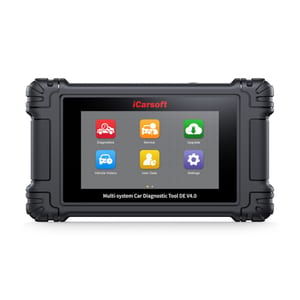
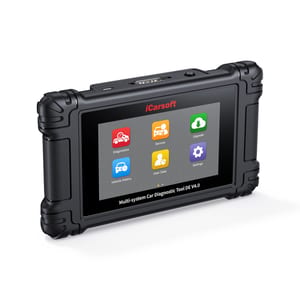
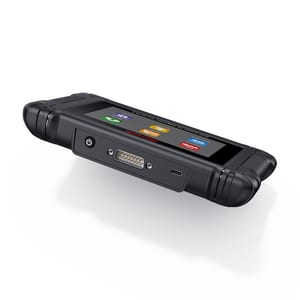
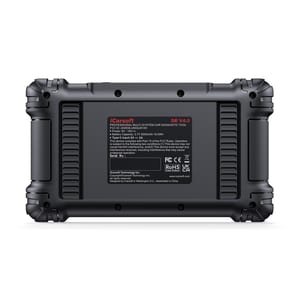
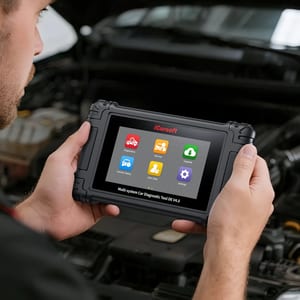
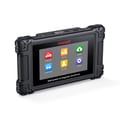
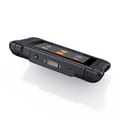
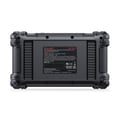
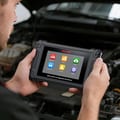
iCarsoft DE V4.0 for German vehicle makes
The iCarsoft DE V4.0 is the multi-brand German tool in the V4.0 range. One handheld covers BMW, Mini, Rolls-Royce, Mercedes-Benz, Maybach, Smart, Sprinter, Porsche, VW, Audi, Seat, Skoda, Bentley, Bugatti and Lamborghini for diagnostics, live data, freeze frame, bidirectional active tests and service routines. It is the right pick for workshops or households running more than one of those brands.
Note: Opel and Vauxhall are NOT in this tool. They are available in the dedicated OP V4.0.
- Covers 10+ German and German-group makes including BMW, Mercedes, Porsche, VW Group and the British / Italian exotics they own.
- Bidirectional active tests, freeze frame, live data and Auto VIN on supported vehicles.
- Service resets across oil, EPB, SAS, DPF, TPMS, throttle adaptation, battery registration, ABS bleed and air suspension.
Aimed at mixed-make German garages and households.
Read more






Most German cars hide more than 30 control units behind the OBD-II port, and the premium ones go past 50. A multi-make tool needs to talk to all of them in the right dialect. The DE V4.0 does that across fifteen German and German-group makes: BMW, Mini, Rolls-Royce, Mercedes-Benz, Maybach, Smart, Sprinter, Porsche, VW, Audi, Seat, Skoda, Bentley, Bugatti and Lamborghini. You give up some single-brand depth (BMW coding, VW long coding and security login, Mercedes-specific SBC and AIRMATIC routines) in exchange for one handheld that does respectable diagnostics, freeze frame, live data and service resets across all of those brands. For mixed garages or multi-make households, that is the right trade. Opel and Vauxhall are not in this tool. Those owners need the dedicated OP V4.0.
Which vehicles the iCarsoft DE V4.0 covers
The iCarsoft DE V4.0 is focused on German and German-group makes brands. Coverage and the depth of specific service routines vary by model year and ECU configuration. Verify your exact vehicle in the coverage list before relying on a specific job.
- BMW
- Mini
- Rolls-Royce
- Mercedes-Benz
- Maybach
- Smart
- Sprinter
- Porsche
- Volkswagen
- Audi
- Seat
- Skoda
- Bentley
- Bugatti
- Lamborghini
All-system diagnostics that go beyond OBD2
On a German vehicle, "all-system" means the powertrain modules (engine, gearbox, and on EV / hybrid: HV battery and inverter where supported), the chassis side (ABS, ESP, steering, suspension), restraint systems (SRS / airbag), comfort and body (BCM, central convenience, infotainment for fault-code retrieval only), and on diesel vehicles the after-treatment and AdBlue / SCR system. The DE V4.0 connects to each of these where supported across BMW, Mini, Rolls-Royce, Mercedes-Benz, Maybach, Smart, Sprinter, Porsche and VW, Audi, Seat, Skoda plus Bentley, Bugatti and Lamborghini, reads and clears DTCs, and pulls ECU identifier data so you can verify software levels.
Coverage varies considerably by brand and model year. Generally speaking: VW, Audi, Seat, Skoda coverage is broad on this multi-make tool, BMW and Mini coverage is good for diagnostics and service but limited for coding (the BMM V4.0 goes further), Mercedes coverage is good for diagnostics and SAS / oil / DPF but stops short of some SBC and AIRMATIC depth, and Porsche coverage handles routine diagnostics and service but does not reach all brand-specific routines that the POR V4.0 does. The British and Italian exotics in VW group (Bentley, Bugatti, Lamborghini) ride on VW platforms, so they share the VW diagnostic stack. Always verify your vehicle and the specific job in the coverage list first.
Bidirectional active tests for verified repairs
Bidirectional active tests work across the German line-up on supported modules. The most common workshop wins are cooling-fan cycle tests across all brands, EGR-valve actuation on diesels (especially VW Audi TDI and BMW N47 / N57), throttle-body adaptation reset after cleaning, EPB caliper retraction for pad service across BMW, MB, VW and Audi, and on supported Mercedes models the SBC pump pre-charge cycle before a brake bleed. The tool prompts for prerequisites (battery support, ignition state, parking brake) before each test.
What the DE V4.0 looks like in practice
Four signature workflows where the tool earns its place:
- Mixed-fleet workshop covering BMW, Audi and Mercedes service customers*. One DE V4.0 handles morning service work on a BMW 3-series (oil reset, brake-pad replacement with EPB service), midday EGR diagnosis on an Audi A4 TDI (DTC retrieval and bidirectional EGR actuation), and an afternoon DPF regen on a Mercedes E-class, without juggling three different scanners or paying three subscriptions.
- VW DSG transmission TCU fault retrieval*. Hesitation on a DQ250 or DQ381 DSG box is often the TCU adapting to wear rather than a hardware fault. The DE V4.0 pulls the TCU fault memory and live data so you can decide between adaptation reset and mechanical work before you open the box.
- Porsche Cayenne and Macan basic service routines*. Oil-life reset after an A or B service, SAS calibration after alignment, EPB caliper retraction for rear-pad replacement. Bread-and-butter Porsche jobs that the DE V4.0 handles on supported model years. For deeper Porsche-specific routines (PCCB conditioning, PASM calibration) the POR V4.0 is the right tool.
- Sprinter and V-class commercial after-treatment work*. Sprinter is included in the DE V4.0 coverage. Use it to read NOx and AdBlue tank data, trigger forced DPF regeneration, and clear after-treatment warnings on commercial vehicles where downtime costs money.
*Only supported on vehicles without secure gateway access (SGW / SFD).
Service and reset functions on this tool
Routine availability depends on the vehicle. Below are the routines the DE V4.0 performs on supported models. Always follow the on-screen prerequisites (ignition state, battery voltage, fuel level for diesel regen).
- Oil and service interval reset. Resets the oil-life counter and service-due indicator after an oil and filter change. When: After every engine oil change or extended service.
- Throttle body adaptation and relearn. Resets and re-teaches the closed-throttle position to the ECU. When: After cleaning or replacing the throttle body, or after a battery disconnection on some makes.
- Electronic parking brake (EPB) service. Retracts the EPB caliper pistons so brake pads can be replaced, then reinitialises the system. When: Before replacing rear brake pads or discs on any vehicle with an electronic parking brake.
- Steering angle sensor (SAS) calibration. Teaches the steering angle sensor where straight-ahead is, so ESP and stability control behave correctly. When: After wheel alignment, steering rack replacement, steering column work, or any ABS / SRS warning related to SAS.
- DPF (diesel particulate filter) regeneration. Forces a manual regeneration cycle to burn off accumulated soot when passive regen has failed. When: After repeated short trips, after a sensor or EGR repair, or when the DPF warning appears.
- Injector coding. Writes the calibration code of each new diesel injector into the ECU so fuel delivery is balanced. When: After replacing one or more diesel injectors.
- ABS bleeding. Actuates the ABS and ESP modulator solenoids so trapped air can be bled out of the hydraulic block. When: After replacing the ABS modulator, master cylinder, or bleeding the brakes with air-in-the-block symptoms.
- TPMS (tyre pressure monitor) reset and relearn. Re-registers wheel-mounted TPMS sensor IDs after tyre rotation, new wheels or sensor replacement. When: After fitting new sensors, changing wheels, or rotating tyres on systems that do not auto-relearn.
- Battery management and registration. Tells the body control module that a new battery has been fitted and (for AGM / EFB) what type it is. When: Any time the battery is replaced on a vehicle with intelligent charging and start-stop.
- Air suspension service. Reads, calibrates and resets air suspension control modules including compressor and valve actuation tests. When: After replacing a compressor, valve block, height sensor or after suspension-related fault codes.
- A/C system reset and learn. Resets and re-learns climate control flap motors, compressor adaptation and refrigerant pressure logic. When: After A/C component replacement, refrigerant service, or climate-control module replacement.
- Headlight initialisation and range adjustment. Calibrates headlight aim sensors and adaptive headlight modules after replacement or alignment. When: After headlight replacement, suspension changes that affect ride height, or related fault codes.
- Transmission adaptation and learn. Resets shift adaptation values and triggers a relearn of clutch wear and shift timing on supported automatic and dual-clutch gearboxes. When: After a transmission fluid and filter service, clutch replacement on DCT, or major adaptation drift causing harsh shifts.
- AdBlue and SCR system reset. Resets AdBlue tank-level sensor, NOx sensor adaptation and SCR-related counters on supported diesels. When: After AdBlue tank refill on vehicles that need a reset, NOx sensor replacement, or SCR fault clearing.
- NOx sensor reset and learn. Performs the relearn routine after replacing one or both NOx sensors on diesels with SCR. When: After NOx sensor replacement or after persistent emissions-related fault codes that point to the NOx sensor.
- High-voltage battery system diagnostics. Reads HV battery management module fault codes, cell-group voltages and pack-temperature data on supported hybrids and EVs. When: After an HV warning, hybrid system fault, or before purchase of a used hybrid or EV.
- Radar and camera (ADAS) calibration. Initiates calibration routines for ADAS sensors after windscreen replacement, sensor swap or related fault codes. When: After windscreen replacement on ADAS-equipped vehicles, after radar or camera replacement, or after dashboard ADAS warnings.
Specifications
Supported diagnostic protocols on this variant: OBD-II, EOBD, CAN, CAN-FD, ISO 9141-2, K-Line, KWP-2000.
| Operating system | Android |
|---|---|
| Processor | Quad-Core 1.3 GHz |
| Memory | 32 GB |
| Display | 5-inch LCD capacitive touchscreen (854 x 480) |
| Connectivity | Wi-Fi 2.4 GHz, USB 2.0, OBD-II |
| Power input | 9 to 18 V vehicle power |
| Battery | 3.7 V, 5000 mAh (7.4 Wh) |
| Tested battery life | ~6 hours continuous use |
| Charging | USB-C input (5 V, 2 A) |
| Operating temperature | 0 to 50 °C |
| Storage temperature | -20 to 70 °C |
| Dimensions | 200 x 116 x 30.2 mm |
| Net weight | ~380 g |
Advantages & drawbacks
- 10+ German and German-group makes covered in one device: BMW, Mini, Rolls-Royce, Mercedes-Benz, Maybach, Smart, Sprinter, Porsche, VW, Audi, Seat, Skoda, Bentley, Bugatti, Lamborghini.
- Bidirectional actuation tests help verify components and pinpoint faults
- Service routines: oil reset, EPB, SAS, DPF, TPMS, injector coding, ABS bleed, throttle relearn, battery management, air suspension.
- Auto VIN identification reduces manual vehicle selection errors
- Touchscreen interface with live data and freeze frame for faster diagnosis
- Free lifetime Wi-Fi updates. Coverage expands continually.
- Functions and module coverage vary by make, model, and year
- Bidirectional tests require careful use and may not be available on every module
- Opel and Vauxhall are NOT included. Those need the dedicated OP V4.0.
- Cars with secure gateway access (SGW / SFD) are not supported
Often purchased together with...
Specs summary
- Suitable for car brand Audi, BMW, Bentley, Lamborghini, Mercedes, Mini, Porsche, Rolls-Royce, Seat, Skoda, Smart, Volkswagen
- Device properties Built in battery, Free updates, Touchscreen, Handheld, Updates, WIFi connection
- Features ABS, Battery coding, Controlling Actuators, Airbag, Component testing, Operate electronic parking brake, Erase fault codes, Freeze frame, Teach in throttle valve, Injector coding, Lambda probe / o2 sensors, Live data, Engine diagnostics, Engine management reset, Oil reset, Brake pad reset, DPF regeneration, Scantool, Service reset, Immobilizer, Calibrate steering angle sensor, Transmission
- Protocol CAN, EOBD, ISO 9141, J1850 PWM, J1850 VPW, K-Line, KWP-2000, OBD2, CAN-FD
Alternative products