

 Suomi
Suomi
 Polski
 Svenska
 Deutsch
 Dansk
Dansk
 Italiano
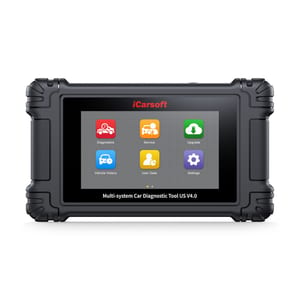
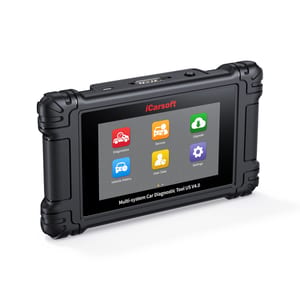
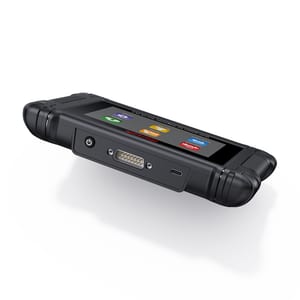
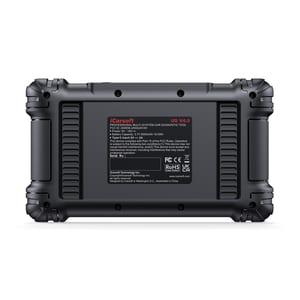
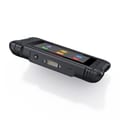
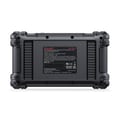
iCarsoft US V4.0 for American car brands
The iCarsoft US V4.0 is the domestic-brand-focused diagnostic scanner built around the protocols and module structures that Ford, GM (Chevrolet, Cadillac, Buick, GMC, Saturn, Hummer), Chrysler, Dodge, Jeep and Holden actually use. It reads and clears DTCs across the full system, captures freeze frame and live data, runs bidirectional active tests on supported modules, and performs the service resets you actually need for maintenance: oil life, throttle relearn, EPB, SAS, DPF regen, TPMS, injector coding, ABS bleed and battery management. Auto VIN, Wi-Fi updates and a 5-inch touchscreen mean no laptop, no licence fees, no per-month subscription. Some Chrysler/Jeep vehicles have limited supported due to secure gateway access (SGW)
- Talks the protocols American brands actually use: J1850 PWM (Ford), J1850 VPW (GM legacy), CAN, CAN-FD.
- Bidirectional active tests for fuel pumps, cooling fans, ABS modulators and more.
- Service routines including injector coding for diesel Duramax, Power Stroke and Cummins applications.
Aimed at owners and small workshops working on Ford, GM and Chrysler/Jeep vehicles, including pickups and SUVs.
Read more






American vehicles speak a different diagnostic dialect to European cars. Ford's J1850 PWM, GM's legacy J1850 VPW, the manufacturer-specific PIDs Chrysler uses on Jeep and Ram. Generic OBD2 readers see standard emissions codes but miss the module-specific data underneath. The US V4.0 is built around those protocols. It reads ABS modulator codes on a Silverado, freeze-frame data on a misfiring Mustang, transmission codes on a 4L60E, and runs the service routines you need to actually finish a repair rather than just see what is wrong.
Which vehicles the iCarsoft US V4.0 covers
The iCarsoft US V4.0 is focused on American (Domestic) and Holden brands. Coverage and the depth of specific service routines vary by model year and ECU configuration. Verify your exact vehicle in the coverage list before relying on a specific job.
- Ford
- Lincoln
- Mercury
- Chevrolet
- Cadillac
- Buick
- GMC
- Saturn
- Hummer
- Chrysler Only supported on vehicles without secure gateway access (SGW)
- Dodge
- Jeep (Only supported on vehicles without secure gateway access (SGW)
- Holden
- GM (parent group)
All-system diagnostics that go beyond OBD2
Full-system on a Ford, GM, Jeep or Chrysler vehicle means the powertrain (PCM / ECM / TCM), ABS / StabiliTrak, SRS (RCM / SDM), the body control module, the instrument cluster, tyre-pressure monitoring, transfer case (on 4WD), and on diesel pickups the engine controller plus the after-treatment, DPF and DEF system. The US V4.0 connects to each of these where supported, reads and clears codes, captures live data and freeze frame, and reads ECU information for cross-referencing.
Auto VIN identification is particularly useful on American vehicles because the VIN encodes the build configuration (engine, transmission, axle, options package) and selecting the wrong one is the most common reason a scan fails. Let the tool pull the VIN and you skip an entire category of "no communication" frustration. Coverage of individual systems varies by model year and trim. Verify in the coverage list before relying on a specific module for a specific job.
Bidirectional active tests for verified repairs
Bidirectional control on American vehicles is where the US V4.0 earns its place next to the dongle-and-app crowd. Fuel-pump priming on a Silverado after a sender-unit swap, cooling-fan low and high-speed actuation on a Ford 5.4L, ABS modulator solenoid cycling for a brake bleed on a Jeep Wrangler, injector cylinder cut-out on a Cummins to isolate a knock. These are tests, not just reads, and they tell you whether the part is failing or the wiring and CAN bus is.
On supported Ford and GM diesel pickups, bidirectional tests extend to EGR-valve actuation, intake-throttle blade testing, and forced DPF regeneration cycles. Coverage varies by model and software level. The tool prompts for prerequisites (ignition state, engine running or off, parking brake, battery voltage) before each test. Do not skip the prompts.
What the US V4.0 looks like in practice
Four signature workflows where the tool earns its place:
- Ford 6.7L Power Stroke DPF forced regeneration. Short-haul Super Duty work trucks routinely pile up soot faster than passive regen can clear it. Use the US V4.0 to read DPF soot loading on live data, then trigger a forced regen with the engine warm and the truck parked clear of grass. Confirm differential pressure drops before you call it done.
- GM 4L60E transmission code retrieval and freeze frame. P0700 plus a shudder on a 2-3 shift on a Silverado is almost always the 3-2 downshift solenoid or pressure-control solenoid. The freeze-frame data captured when the code stored (vehicle speed, line pressure, TFT temperature) points to which one, and saves you a transmission pan drop you did not need.
- Chrysler and Jeep WIN module communication check. No-start with the dash going dark on a Wrangler JK or Grand Cherokee WK is often the Wireless Ignition Node module, not the battery or starter. Use the tool to attempt communication with the WIN module. If it fails to respond on a known-good battery, the diagnosis is in your hand in two minutes.
- Cadillac Magnetic Ride Control damper actuation test. Knocking from a corner on an Escalade or CTS-V with MRC is usually a damper, but proving which one matters before you replace a €1,500 part. Use bidirectional control to cycle the damper solenoids and read current draw. The bad one shows up immediately.
Service and reset functions on this tool
Routine availability depends on the vehicle. Below are the routines the US V4.0 performs on supported models. Always follow the on-screen prerequisites (ignition state, battery voltage, fuel level for diesel regen).
- Oil and service interval reset. Resets the oil-life counter and service-due indicator after an oil and filter change. When: After every engine oil change or extended service.
- Throttle body adaptation and relearn. Resets and re-teaches the closed-throttle position to the ECU. When: After cleaning or replacing the throttle body, or after a battery disconnection on some makes.
- Electronic parking brake (EPB) service. Retracts the EPB caliper pistons so brake pads can be replaced, then reinitialises the system. When: Before replacing rear brake pads or discs on any vehicle with an electronic parking brake.
- Steering angle sensor (SAS) calibration. Teaches the steering angle sensor where straight-ahead is, so ESP and stability control behave correctly. When: After wheel alignment, steering rack replacement, steering column work, or any ABS / SRS warning related to SAS.
- DPF (diesel particulate filter) regeneration. Forces a manual regeneration cycle to burn off accumulated soot when passive regen has failed. When: After repeated short trips, after a sensor or EGR repair, or when the DPF warning appears.
- Injector coding. Writes the calibration code of each new diesel injector into the ECU so fuel delivery is balanced. When: After replacing one or more diesel injectors.
- ABS bleeding. Actuates the ABS and ESP modulator solenoids so trapped air can be bled out of the hydraulic block. When: After replacing the ABS modulator, master cylinder, or bleeding the brakes with air-in-the-block symptoms.
- TPMS (tyre pressure monitor) reset and relearn. Re-registers wheel-mounted TPMS sensor IDs after tyre rotation, new wheels or sensor replacement. When: After fitting new sensors, changing wheels, or rotating tyres on systems that do not auto-relearn.
- Battery management and registration. Tells the body control module that a new battery has been fitted and (for AGM / EFB) what type it is. When: Any time the battery is replaced on a vehicle with intelligent charging and start-stop.
- Air suspension service. Reads, calibrates and resets air suspension control modules including compressor and valve actuation tests. When: After replacing a compressor, valve block, height sensor or after suspension-related fault codes.
- A/C system reset and learn. Resets and re-learns climate control flap motors, compressor adaptation and refrigerant pressure logic. When: After A/C component replacement, refrigerant service, or climate-control module replacement.
- Headlight initialisation and range adjustment. Calibrates headlight aim sensors and adaptive headlight modules after replacement or alignment. When: After headlight replacement, suspension changes that affect ride height, or related fault codes.
- Transmission adaptation and learn. Resets shift adaptation values and triggers a relearn of clutch wear and shift timing on supported automatic and dual-clutch gearboxes. When: After a transmission fluid and filter service, clutch replacement on DCT, or major adaptation drift causing harsh shifts.
- AdBlue and SCR system reset. Resets AdBlue tank-level sensor, NOx sensor adaptation and SCR-related counters on supported diesels. When: After AdBlue tank refill on vehicles that need a reset, NOx sensor replacement, or SCR fault clearing.
- NOx sensor reset and learn. Performs the relearn routine after replacing one or both NOx sensors on diesels with SCR. When: After NOx sensor replacement or after persistent emissions-related fault codes that point to the NOx sensor.
- High-voltage battery system diagnostics. Reads HV battery management module fault codes, cell-group voltages and pack-temperature data on supported hybrids and EVs. When: After an HV warning, hybrid system fault, or before purchase of a used hybrid or EV.
- Radar and camera (ADAS) calibration. Initiates calibration routines for ADAS sensors after windscreen replacement, sensor swap or related fault codes. When: After windscreen replacement on ADAS-equipped vehicles, after radar or camera replacement, or after dashboard ADAS warnings.
Specifications
Supported diagnostic protocols on this variant: OBD-II, EOBD, CAN, CAN-FD, J1850 PWM, J1850 VPW, K-Line.
| Operating system | Android |
|---|---|
| Processor | Quad-Core 1.3 GHz |
| Memory | 32 GB |
| Display | 5-inch LCD capacitive touchscreen (854 x 480) |
| Connectivity | Wi-Fi 2.4 GHz, USB 2.0, OBD-II |
| Power input | 9 to 18 V vehicle power |
| Battery | 3.7 V, 5000 mAh (7.4 Wh) |
| Tested battery life | ~6 hours continuous use |
| Charging | USB-C input (5 V, 2 A) |
| Operating temperature | 0 to 50 °C |
| Storage temperature | -20 to 70 °C |
| Dimensions | 200 x 116 x 30.2 mm |
| Net weight | ~380 g |
Advantages & drawbacks
- Dedicated coverage for American vehicle makes with brand specific system access
- Bi-directional active tests help confirm actuator and module behavior
- Full protocol support including J1850 PWM (Ford) and J1850 VPW (GM legacy).
- Auto VIN identification reduces manual selection errors
- Includes common service routines such as oil reset, EPB, SAS, DPF, TPMS, injector coding, ABS bleeding, and battery management where supported
- Free lifetime Wi-Fi updates. Coverage expands without a subscription.
- Function availability varies by make, model, year, and installed options
- Only supported on vehicles without secure gateway access (SGW)
- Pre-1996 (pre-OBD-II) vehicles not supported. By design, no tool of this class is.
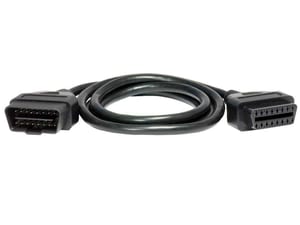
Often purchased together with...
Specs summary
- Suitable for car brand Chevrolet, Chrysler, Dodge, Ford USA, General Motors, Jeep
- Device properties Built in battery, Free updates, Touchscreen, Handheld, Updates, WIFi connection
- Features ABS, Airbag, Freeze frame, Live data, Service reset
- Protocol CAN, EOBD, ISO 9141, J1850 PWM, J1850 VPW, K-Line, KWP-2000, OBD2, CAN-FD
Alternative products