

 Suomi
Suomi
 Polski
 Svenska
 Deutsch
 Dansk
Dansk
 Italiano
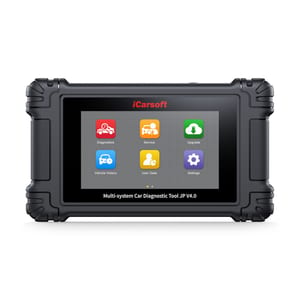
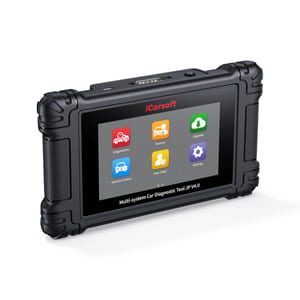
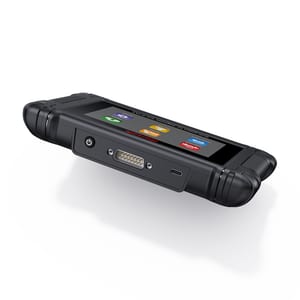
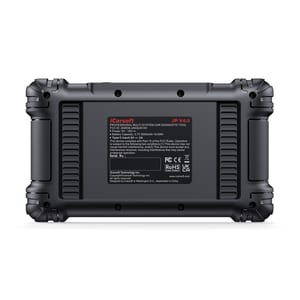
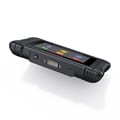
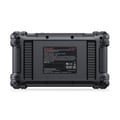
iCarsoft JP V4.0 for Japanese and Korean car brands
The iCarsoft JP V4.0 is a brand-focused, all-system diagnostic scanner for Japanese and Korean cars. It reads and clears DTCs across Engine, Transmission, ABS, SRS and Body where supported, shows live data and freeze frame, and runs bidirectional actuation tests so you can confirm a repair instead of guessing at it. Wi-Fi updates, Auto VIN, and a 5-inch touchscreen keep it usable on a driveway or a workshop bench.
- Bidirectional active tests verify components after replacement. No more guess-and-replace.
- Covers Toyota, Honda, Nissan, Hyundai, Kia, Mazda, Mitsubishi, Subaru, Suzuki and more.
- Service routines for oil reset, EPB, SAS, DPF, TPMS and battery registration where supported.
Aimed at multi-make Japanese and Korean DIYers and small workshops who want one capable handheld instead of a separate dongle and app per brand.
Read more







Toyota, Kia, Nissan and Hyundai dominate driveways across Europe, but a generic OBD2 dongle barely scratches them. It reads the engine code and stops there. That leaves you in the dark on ABS, transmission, airbag and (on Toyota / Lexus hybrids) HV-battery faults. The JP V4.0 was designed for these brands specifically. It talks to the modules they actually use, captures the data you need to act on a fault, and lets you actuate components to confirm a repair worked.
Which vehicles the iCarsoft JP V4.0 covers
The iCarsoft JP V4.0 is focused on Japanese and Korean brands. Coverage and the depth of specific service routines vary by model year and ECU configuration. Verify your exact vehicle in the coverage list before relying on a specific job.
- Toyota
- Lexus
- Scion
- Honda
- Acura
- Nissan
- Nissan GTR
- Infiniti
- Hyundai
- Kia
- Daewoo
- Mazda
- Mitsubishi
- Subaru
- Suzuki
- Isuzu
All-system diagnostics that go beyond OBD2
The JP V4.0 is not just an OBD2 reader. On supported vehicles it connects to a wide range of control units: engine ECM, transmission TCM, ABS / VSC, SRS airbag, body control modules, and (on supported Toyota and Lexus hybrids) the hybrid inverter and HV battery management units. That matters because a single warning light on a modern Japanese or Korean car often involves more than one ECU. An intermittent ESP light, for example, can sit in ABS, in steering-angle data, in the wheel-speed sensor bus, or in the brake-pedal switch. A generic scanner that only sees the engine code will send you in circles.
Use the tool to read DTCs across modules, see freeze-frame data captured at the moment a fault stored, view live data while the symptom is happening, and read ECU hardware and software identifiers when comparing two vehicles. Auto VIN identification cuts vehicle-selection time on supported models. Coverage and module depth vary by model year and ECU configuration. Always verify your exact vehicle against the coverage list before relying on the tool for a specific job.
Bidirectional active tests for verified repairs
Bidirectional control (also called active testing or actuation) is the difference between "a stored code suggests a sticky EGR valve" and "I just commanded the EGR valve open and watched the MAP-sensor response on live data". With supported Japanese and Korean modules, the JP V4.0 can command fuel pumps, cooling fans, A/C clutches, EGR valves, throttle bodies, ABS pump-motor cycles, injector cut-outs, and (where supported) hybrid-system component checks.
The practical impact is fewer wrongly-replaced parts. A common failure mode on Toyota and Lexus hybrids is an intermittent INVERTER warning that turns out to be a coolant-pump or sensor issue rather than the inverter itself. Bidirectional testing isolates the failure to the actual non-responding component before you spend on a replacement. Bidirectional support depends on the vehicle. Many tests require ignition on / engine off, some require the parking brake applied, and the tool prompts you through the prerequisites.
What the JP V4.0 looks like in practice
Four signature workflows where the tool earns its place:
- Toyota and Lexus hybrid inverter warning isolation. An intermittent red triangle on a Prius or RX hybrid is often coolant-flow related rather than an inverter failure. Live-data the inverter coolant pump RPM, then actuate the pump and watch the response. A stuck pump shows up in 30 seconds.
- Nissan CVT step-logic relearn after fluid change. CVTs on Altima, X-Trail and Rogue need a TCM relearn after a fluid change or transmission service. The JP V4.0 can clear stored adaptations on supported vehicles so the gearbox re-learns clean rather than carrying old shift behaviour into new fluid.
- Hyundai and Kia theta-II misfire freeze-frame diagnosis. Cold-start misfires on theta-II engines are often cylinder-specific and load-dependent. Pulling the freeze-frame data captured at the exact moment the fault stored (RPM, load, coolant temp, short-term fuel trim) tells you whether you are chasing an ignition coil, an injector, or a bigger bottom-end story.
- Mazda Skyactiv-D DPF regeneration cycle. Short-trip city use on a CX-5 diesel can leave the DPF in a state where passive regen no longer keeps up. Use the JP V4.0 to verify the current soot loading on live data, then trigger a forced regeneration cycle with the engine at operating temperature.
Service and reset functions on this tool
Routine availability depends on the vehicle. Below are the routines the JP V4.0 performs on supported models. Always follow the on-screen prerequisites (ignition state, battery voltage, fuel level for diesel regen).
- Oil and service interval reset. Resets the oil-life counter and service-due indicator after an oil and filter change. When: After every engine oil change or extended service.
- Throttle body adaptation and relearn. Resets and re-teaches the closed-throttle position to the ECU. When: After cleaning or replacing the throttle body, or after a battery disconnection on some makes.
- Electronic parking brake (EPB) service. Retracts the EPB caliper pistons so brake pads can be replaced, then reinitialises the system. When: Before replacing rear brake pads or discs on any vehicle with an electronic parking brake.
- Steering angle sensor (SAS) calibration. Teaches the steering angle sensor where straight-ahead is, so ESP and stability control behave correctly. When: After wheel alignment, steering rack replacement, steering column work, or any ABS / SRS warning related to SAS.
- DPF (diesel particulate filter) regeneration. Forces a manual regeneration cycle to burn off accumulated soot when passive regen has failed. When: After repeated short trips, after a sensor or EGR repair, or when the DPF warning appears.
- Injector coding. Writes the calibration code of each new diesel injector into the ECU so fuel delivery is balanced. When: After replacing one or more diesel injectors.
- ABS bleeding. Actuates the ABS and ESP modulator solenoids so trapped air can be bled out of the hydraulic block. When: After replacing the ABS modulator, master cylinder, or bleeding the brakes with air-in-the-block symptoms.
- TPMS (tyre pressure monitor) reset and relearn. Re-registers wheel-mounted TPMS sensor IDs after tyre rotation, new wheels or sensor replacement. When: After fitting new sensors, changing wheels, or rotating tyres on systems that do not auto-relearn.
- Battery management and registration. Tells the body control module that a new battery has been fitted and (for AGM / EFB) what type it is. When: Any time the battery is replaced on a vehicle with intelligent charging and start-stop.
- Air suspension service. Reads, calibrates and resets air suspension control modules including compressor and valve actuation tests. When: After replacing a compressor, valve block, height sensor or after suspension-related fault codes.
- A/C system reset and learn. Resets and re-learns climate control flap motors, compressor adaptation and refrigerant pressure logic. When: After A/C component replacement, refrigerant service, or climate-control module replacement.
- Headlight initialisation and range adjustment. Calibrates headlight aim sensors and adaptive headlight modules after replacement or alignment. When: After headlight replacement, suspension changes that affect ride height, or related fault codes.
- Transmission adaptation and learn. Resets shift adaptation values and triggers a relearn of clutch wear and shift timing on supported automatic and dual-clutch gearboxes. When: After a transmission fluid and filter service, clutch replacement on DCT, or major adaptation drift causing harsh shifts.
- AdBlue and SCR system reset. Resets AdBlue tank-level sensor, NOx sensor adaptation and SCR-related counters on supported diesels. When: After AdBlue tank refill on vehicles that need a reset, NOx sensor replacement, or SCR fault clearing.
- NOx sensor reset and learn. Performs the relearn routine after replacing one or both NOx sensors on diesels with SCR. When: After NOx sensor replacement or after persistent emissions-related fault codes that point to the NOx sensor.
- High-voltage battery system diagnostics. Reads HV battery management module fault codes, cell-group voltages and pack-temperature data on supported hybrids and EVs. When: After an HV warning, hybrid system fault, or before purchase of a used hybrid or EV.
- Radar and camera (ADAS) calibration. Initiates calibration routines for ADAS sensors after windscreen replacement, sensor swap or related fault codes. When: After windscreen replacement on ADAS-equipped vehicles, after radar or camera replacement, or after dashboard ADAS warnings.
Specifications
Supported diagnostic protocols on this variant: OBD-II, EOBD, CAN, CAN-FD, ISO 9141-2, K-Line, KWP-2000.
| Operating system | Android |
|---|---|
| Processor | Quad-Core 1.3 GHz |
| Memory | 32 GB |
| Display | 5-inch LCD capacitive touchscreen (854 x 480) |
| Connectivity | Wi-Fi 2.4 GHz, USB 2.0, OBD-II |
| Power input | 9 to 18 V vehicle power |
| Battery | 3.7 V, 5000 mAh (7.4 Wh) |
| Tested battery life | ~6 hours continuous use |
| Charging | USB-C input (5 V, 2 A) |
| Operating temperature | 0 to 50 °C |
| Storage temperature | -20 to 70 °C |
| Dimensions | 200 x 116 x 30.2 mm |
| Net weight | ~380 g |
Advantages & drawbacks
- All-system access (engine, transmission, ABS, SRS, body, hybrid where supported), not just engine codes.
- Bidirectional actuation tests help confirm component operation on supported modules
- Free lifetime Wi-Fi updates. The coverage list keeps expanding without per-update fees.
- Touchscreen interface improves live data review and navigation during troubleshooting
- Includes common service routines such as oil reset, EPB service, SAS calibration and DPF regeneration where supported
- Strong coverage of all major Japanese and Korean makes, including hybrid systems on Toyota and Lexus
- Function availability varies by make, model, year and ECU configuration
- Bidirectional tests are not guaranteed for every module on every supported vehicle
- Some vehicles may expose limited modules through diagnostic gateways, reducing coverage
- Pre-2008 Japanese imports without a standard 16-pin OBD-II port are not supported.
Often purchased together with...
Specs summary
- Suitable for car brand Honda, Hyundai, Infiniti, Kia, Lexus, Mazda, Mitsubishi, Nissan, Subaru, Suzuki, Toyota
- Device properties Built in battery, Free updates, Touchscreen, Handheld, Updates, WIFi connection
- Features ABS, Battery coding, Controlling Actuators, Airbag, Component testing, Operate electronic parking brake, Erase fault codes, Freeze frame, Teach in throttle valve, Injector coding, Lambda probe / o2 sensors, Live data, Engine diagnostics, Engine management reset, Oil reset, Brake pad reset, DPF regeneration, Scantool, Service reset, Immobilizer, Calibrate steering angle sensor, Transmission
- Protocol CAN, EOBD, ISO 9141, J1850 PWM, J1850 VPW, JOBD, K-Line, KWP-2000, OBD2, CAN-FD
Alternative products